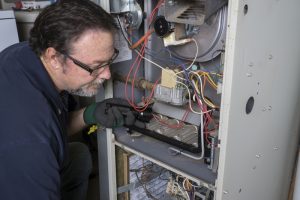
Heat exchangers are used in a variety of appliances, both industrial and in the home. The most familiar examples will be found in your refrigerator or HVAC systems, specifically in furnaces.
However, the type of heat exchanger we want to focus on is the one found inside your natural gas furnace. The heat exchanger is the most important component in your furnace, but if they develop issues, they need to be taken care of immediately.
First, What Is a Heat Exchanger?
According to its simplest definition, a heat exchanger is a device that transfers heat. And according to a more specific definition focused on HVAC products in the home, a heat exchanger is a device that turns combusted gas into hot air.
How it looks exactly will depend on the brand of furnace, but for the most part, heat exchangers consist of a coiled set of metal tubing.
Is the Heat Exchanger Dangerous?
Heat exchangers on their own are nothing to worry about. They’ll work silently and efficiently for the majority of their lifespan, but after several years, they can wear down and become dangerous. At that point, they make create the risk of carbon monoxide leaks.
Carbon monoxide is an odorless, colorless, and poisonous gas that can endanger everyone in your household. It’s mandatory that you also have a carbon monoxide detector installed alongside your furnace in the event that a leak was to occur. When dangerous levels of carbon monoxide are detected, the alarm will go off, alerting you to evacuate.
What Are the Signs a Furnace Needs Immediate Repair?
A damaged heat exchanger can make furnace repair urgent because cracks may allow carbon monoxide to escape into the home. Signs that warrant immediate professional attention include:
- A carbon monoxide detector sounds while the furnace is running.
- The furnace has a cracked or damaged heat exchanger.
- The system is more than 10 years old and developing major component problems.
- Heating performance has declined or the furnace is no longer operating reliably.
If a heat exchanger is cracked, stop using the furnace and have a professional inspect the system to determine whether repair or replacement is the safer option.
How Does a Carbon Monoxide Leak Occur?
The main reason this may happen is due to cracks developing in the heat exchanger.
Heat can have a surprising effect on metallic objects such as the heat exchanger. The heat exchanger will expand when its heated, and then contract back to its normal shape as it returns to a normal temperature. This is all just part of its normal function in creating warm air for your home. However, this process can be taxing on the heat exchanger, making it brittle—enough that it may develop cracks after several years of usage.
From those cracks, fuel that is not completely burned—carbon monoxide—will be able to escape into your home.
The bad news is that cracks are inevitable—it’s just a part of how metal reacts to fluctuating temperatures. The good news is that heat exchangers are made to withstand this wear and tear for several years, typically giving you well over a decade of home heating without issue.
Can the Heat Exchanger Be Replaced?
Yes, the heat exchanger can be replaced—but it’s not always the best option. Simply replacing the heat exchanger is a lengthy process that can cost nearly $3,500. In some cases, it makes more sense just to have the furnace replaced, but there are exceptions.
If your furnace is younger than 10 years old and heats the home without issue, then replacement is your best bet.
If your furnace is older than 10, however, you’re better off with getting a new furnace installation in Cedar Grove, NJ. An aging furnace will simply not be able to give you the same standard of efficiency and comfort that it could when it was brand new.
Frequently Asked Questions
Question: What happens when a furnace heat exchanger cracks?
Answer: A cracked heat exchanger can allow combustion gases, including carbon monoxide, to escape from the furnace instead of being safely vented outside. Because carbon monoxide is colorless and odorless, the damage can create a serious safety concern and should be inspected by a qualified HVAC professional as soon as possible.
Question: What causes a furnace heat exchanger to crack?
Answer: Heat exchangers repeatedly expand as the furnace heats up and contract as it cools, which can gradually weaken the metal over many heating cycles. Age, overheating, corrosion, restricted airflow, and other furnace problems can also increase stress on the component and contribute to cracking.
Question: Can a cracked heat exchanger cause carbon monoxide to leak into your home?
Answer: Yes, a cracked heat exchanger may allow carbon monoxide and other combustion gases to mix with the air circulating through your home. Since carbon monoxide cannot be seen or smelled, working detectors are important, but any suspected heat exchanger damage still requires prompt professional inspection.
Question: Can a cracked furnace heat exchanger be replaced?
Answer: A damaged heat exchanger can often be replaced, but the repair may require significant labor because the component is located deep inside the furnace. Depending on the furnace’s age, condition, and repair cost, replacing the entire system may sometimes be a more practical long-term option.
Question: Should you keep using a furnace with a cracked heat exchanger?
Answer: A furnace with a confirmed cracked heat exchanger should not continue operating normally because the damage may allow dangerous combustion gases to enter the home. A qualified HVAC technician should inspect the system promptly and determine whether repairing the heat exchanger or replacing the furnace is the safer solution.
Contact MarGo Plumbing Heating Cooling Inc. today to schedule furnace maintenance.